- Photonic NPU Gen 2, developed and manufactured in Stuttgart
- Drivers, software stack and the Q.ANT SDK
- Onboarding, project support and final workshop
Closed beta · Pilot programme
Photonic computing. On real hardware.
We are opening our photonic Native Processing Unit (NPU) Gen 2 to selected pilot partners, on sovereign IONOS bare metal infrastructure. Develop or optimise AI models and apply with your use case.
- The first photonic NPU in commercial datacenter operation
- Bare-metal access in the sovereign EU cloud of IONOS
- Support from our team throughout the entire project
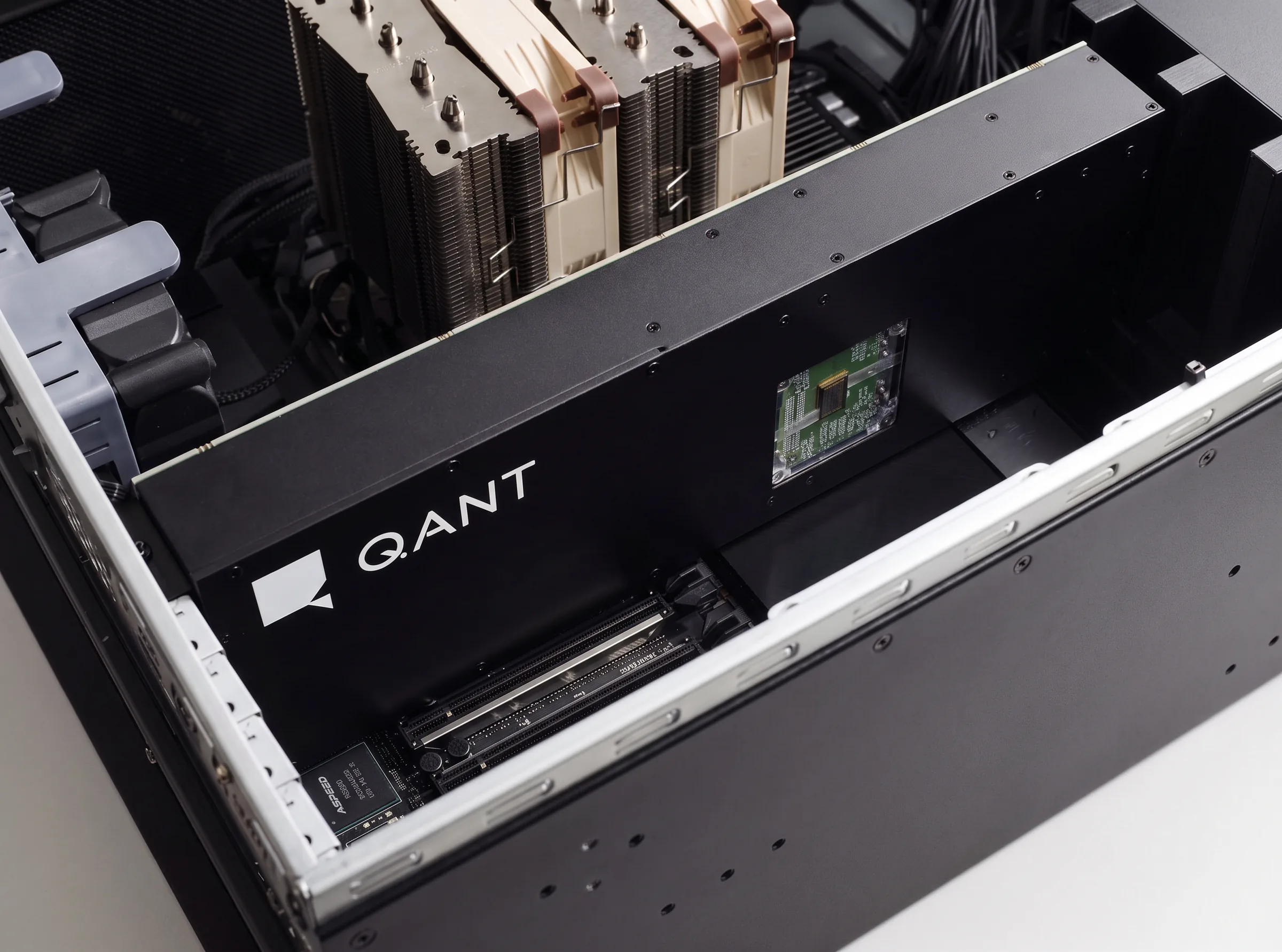
Photonic computing on sovereign bare-metal infrastructure.
No simulation, no emulation. As a pilot partner, you test our NPU exactly as it will later run in production.
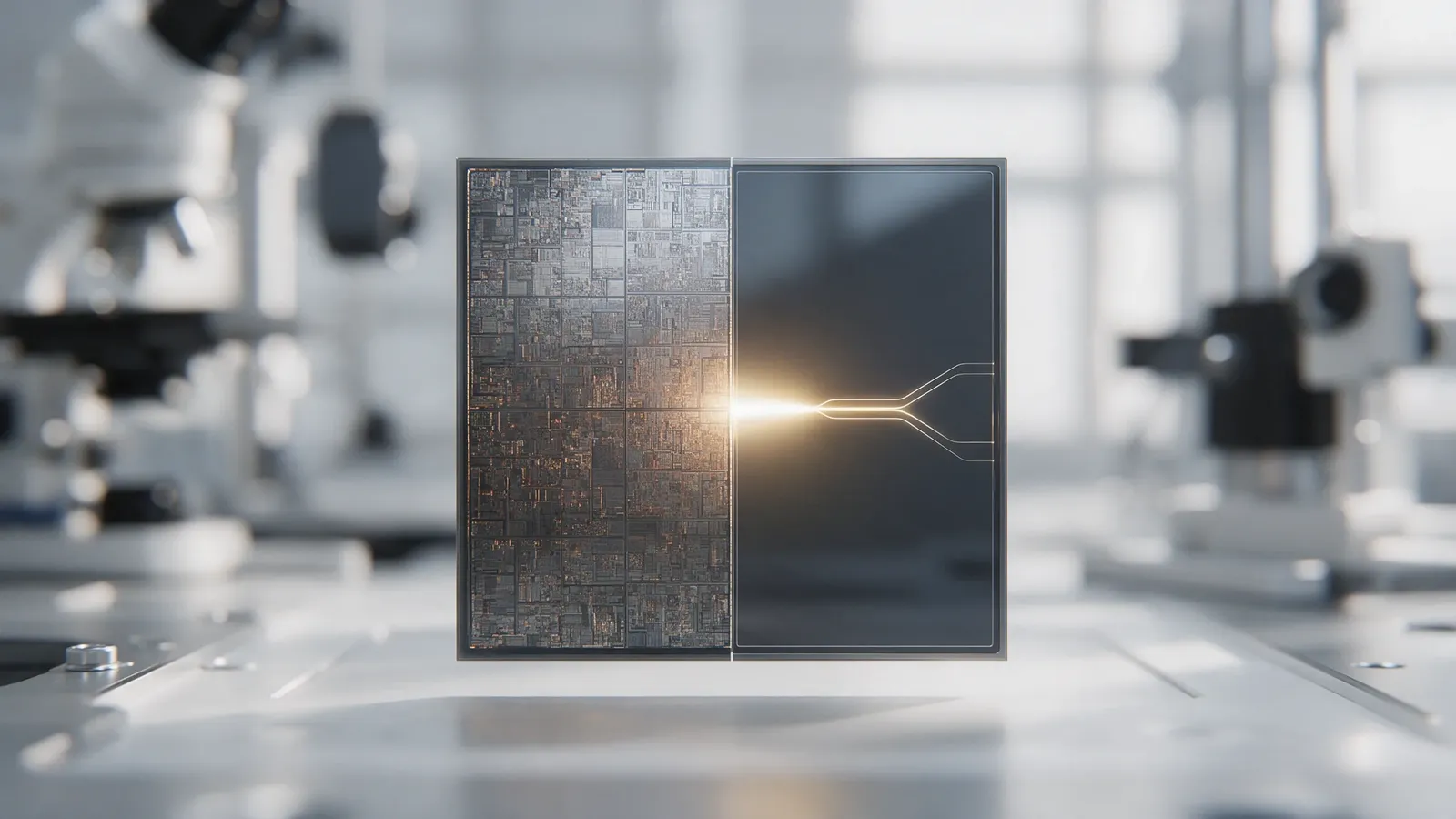
Computing in the optical domain.
Our NPU processes non-linear functions directly in the optical domain: no detour via electrical signals, no transistor cascades.
Sovereign bare-metal access.
IONOS provisions your server manually on its bare metal infrastructure. GDPR-compliant, hosted in Germany, in certified IONOS data centres.
Supported by our experts.
Onboarding, project support and a final workshop with the Q.ANT team. Your findings feed directly into the further development of the NPU and its software stack.
NPU Gen 2 performance.
SMALLER MODELS. SAME ACCURACY.
Because our NPU computes nonlinear functions natively, models reach the same prediction quality with substantially fewer trainable parameters than on conventional architectures.
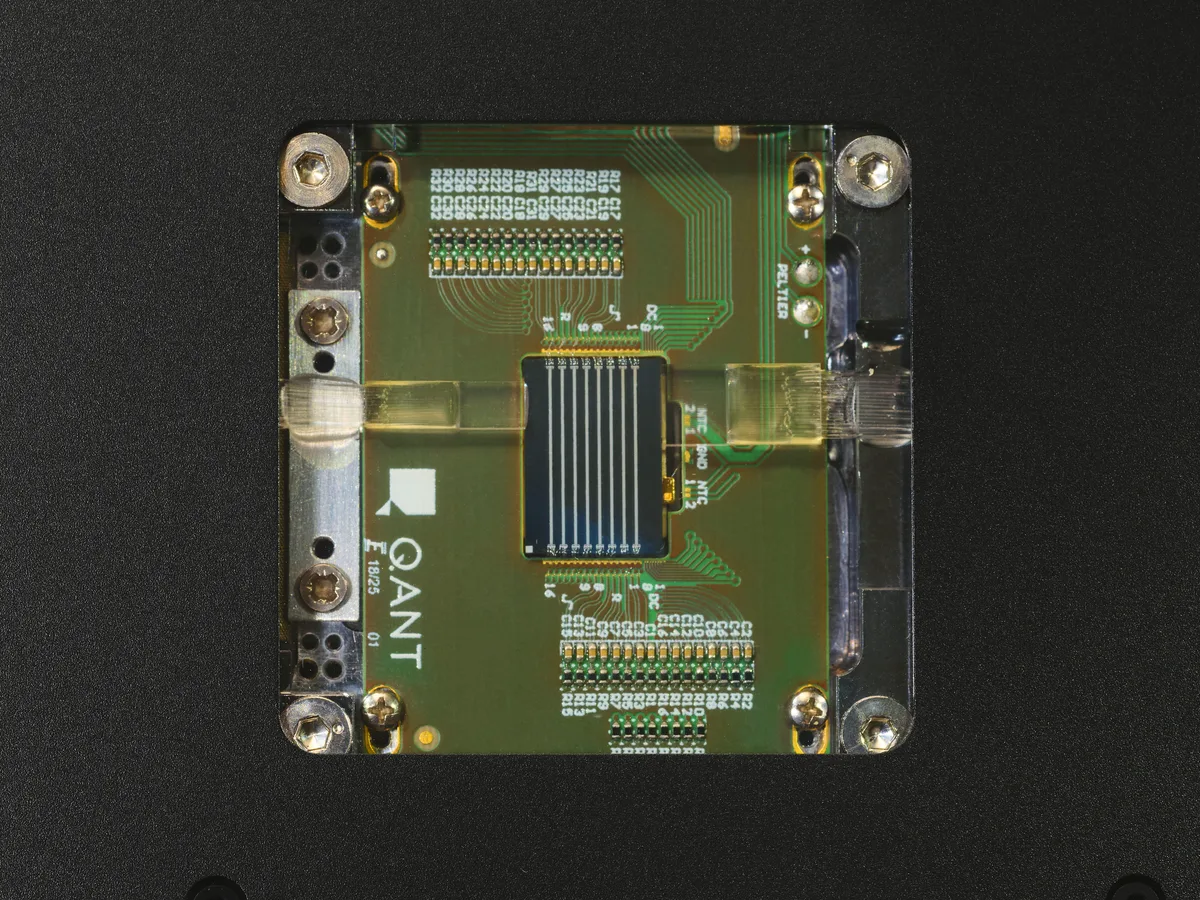
40%
fewer parameters in image processing
65%
fewer parameters in time-series prediction
99.7%
BF16 accuracy compared with conventional semiconductors
Which workloads is the NPU Gen 2 suited for?
The photonic architecture plays to its strengths wherever non-linear operations are compute-intensive: in manufacturing, in research and in AI development.
Time-series prediction
Non-linear forecasting models run on the NPU with 65% fewer parameters at the same prediction accuracy and with significantly less compute.
- Sales and demand forecasting in retail
- Predictive maintenance in industry
- Load management and grid frequency monitoring
Industrial vision
Defect detection and classification models achieve the same detection performance on the NPU with 40% fewer parameters, for faster inline inspection.
- Quality assurance and defect detection
- OCR and document classification
- Real-time object detection
LLM and foundation model inference
The NPU accelerates linear and non-linear operations of large language models in a single optical step, without the bottlenecks of conventional GPU inference pipelines.
- Inference with open-source LLMs
- Embeddings and semantic search
- High-throughput RAG pipelines
Physical AI and robotics
Control and sensing models benefit from the low latency of photonic processing, wherever response time matters.
- Robot control and motion planning
- Sensor fusion and environment modelling
- Autonomous systems with real-time requirements
Scientific simulation
The NPU natively accelerates Fourier transforms and partial differential equations, without the detour via conventional semiconductor architectures.
- Climate and fluid-flow simulation
- Quantum physics and materials research
- Industrial R&D with heavy simulation workloads
World models
World models need non-linear operations at scale. That is exactly what the photonic architecture of the NPU Gen 2 is designed for.
- Simulation-based reinforcement learning
- Generative environment models
- Autonomous agents with a planning horizon
How the pilot programme works.
Application and selection
You describe your use case. Our experts review it, and in a video call we evaluate whether the use case meets the criteria for approval.
Onboarding
We refine the use case and commission the server together. Educational material, code samples and documentation guide your first steps.
Project support
Workload review, first performance observations and joint adjustment of the test focus during the project.
Final workshop
Together we evaluate energy and performance metrics, assess suitability for production use and discuss the transition to the next phase.

Apply for the pilot now.
Participation is free of charge. We will get in touch to discuss your use case and agree the next steps.
- Free of charge for selected pilot partners
- Q.ANT NPU Gen 2 on bare metal
- IONOS data centre in Germany, ISO 27001
Due to technical and legal aspects, you will have to register on the German IONOS website. To fill out the application form, here are some translations:
| On the IONOS form (German) | In English |
|---|---|
| Form fields (* = required) | |
| Vorname* | First name* |
| Nachname* | Last name* |
| Unternehmensname* | Company name* |
| E-Mail* | Email* |
| Telefonnummer | Phone number (country code list in English) |
| Use-Case* | Use case* |
| Beschreibung von Use-Case | Describe your use case |
| Use case options | |
| Bitte auswählen | Please select |
| Zeitreihen-Vorhersagen | Time-series prediction |
| Bildverarbeitung | Image processing / industrial vision |
| LLM-/Foundation-Model-Inferenz | LLM / foundation model inference |
| Physical AI/Robotik | Physical AI / robotics |
| Wissenschaftliche Simulation | Scientific simulation |
| World Models | World models |
| Sonstiges / noch unklar | Other / not sure yet |
| Consent and submit | |
| Ich erkenne die Teilnahmebedingungen für die Beta Phase an. … | I accept the terms of participation for the beta phase. By participating, I consent to the processing of my personal data in accordance with the privacy policy, which I have read and understood. Recourse to the courts is excluded. I also expressly consent to my contact details being shared with Q.ANT to the extent necessary and in compliance with data protection regulations. (Translation for orientation only; the German text applies.) |
| * Pflichtfeld | * Required field |
| Bewerbung absenden | Submit application |
IONOS Application Form Opens the German IONOS website
Developed by Q.ANT. Operated by IONOS.
We bring the photonic hardware, the software stack and the support. IONOS brings the sovereign infrastructure your pilot runs on.

- Bare-metal server, provisioned manually, SSH access with root rights
- ISO 27001-certified data centre in Germany, GDPR-compliant
- Technical operation of the infrastructure by IONOS
Frequently asked questions about the pilot.
Answers to the most important questions about taking part. Anything else? Write to us via the application form.
How does the application process work?
After you apply, our experts review your use case. If it is a good fit in principle, we clarify open questions and details with you in a video call. If the use case is suitable, onboarding follows with tutorials, code samples and documentation.
What are the conditions for taking part?
You need a use case you can describe, and you must accept the terms of participation for the beta phase.
What does participation cost?
Participation is free of charge for selected pilot partners.
How does technical access to the NPU Gen 2 work?
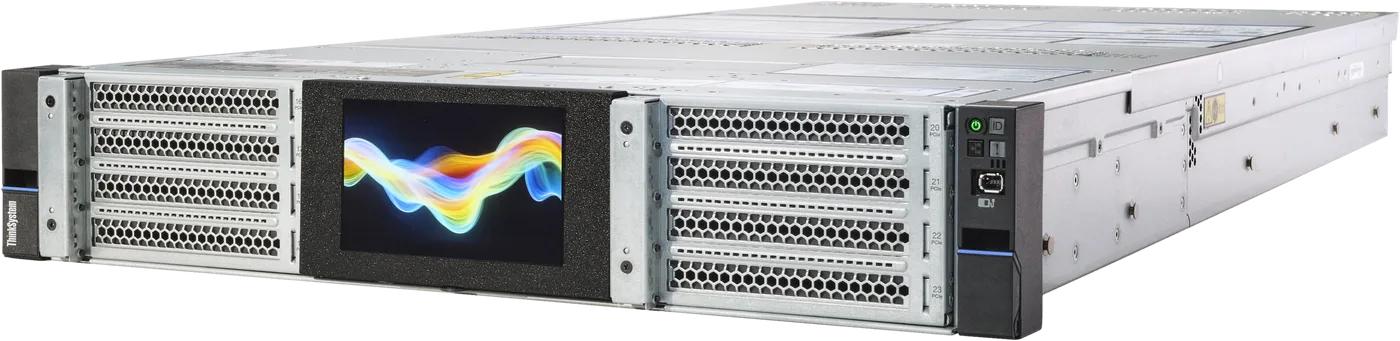
You receive a manually provisioned bare-metal server in the IONOS bare metal infrastructure, comparable to how IONOS provides its GPU servers. Access is via SSH with root rights, optionally via a KVM console. We support you during commissioning.
Which models and frameworks are supported?
We provide drivers and a software stack that covers common frameworks for non-linear workloads, including C/C++ and Python APIs and PyTorch integration through the Q.ANT SDK. We clarify specific compatibility during onboarding, tailored to your use case.
Where does the server run, and is it GDPR-compliant?
The pilot runs in an ISO 27001-certified IONOS data centre in Germany: like all IONOS bare-metal and cloud products, fully GDPR-compliant and sovereign within the EU.
What happens to my results after the pilot?
Your workloads, data and results remain your property and are treated confidentially. Aggregated, anonymised insights from our conversations feed into the further development of the NPU and the platform.
Compute with light.
Places in the pilot programme are limited. Apply now with your use case.